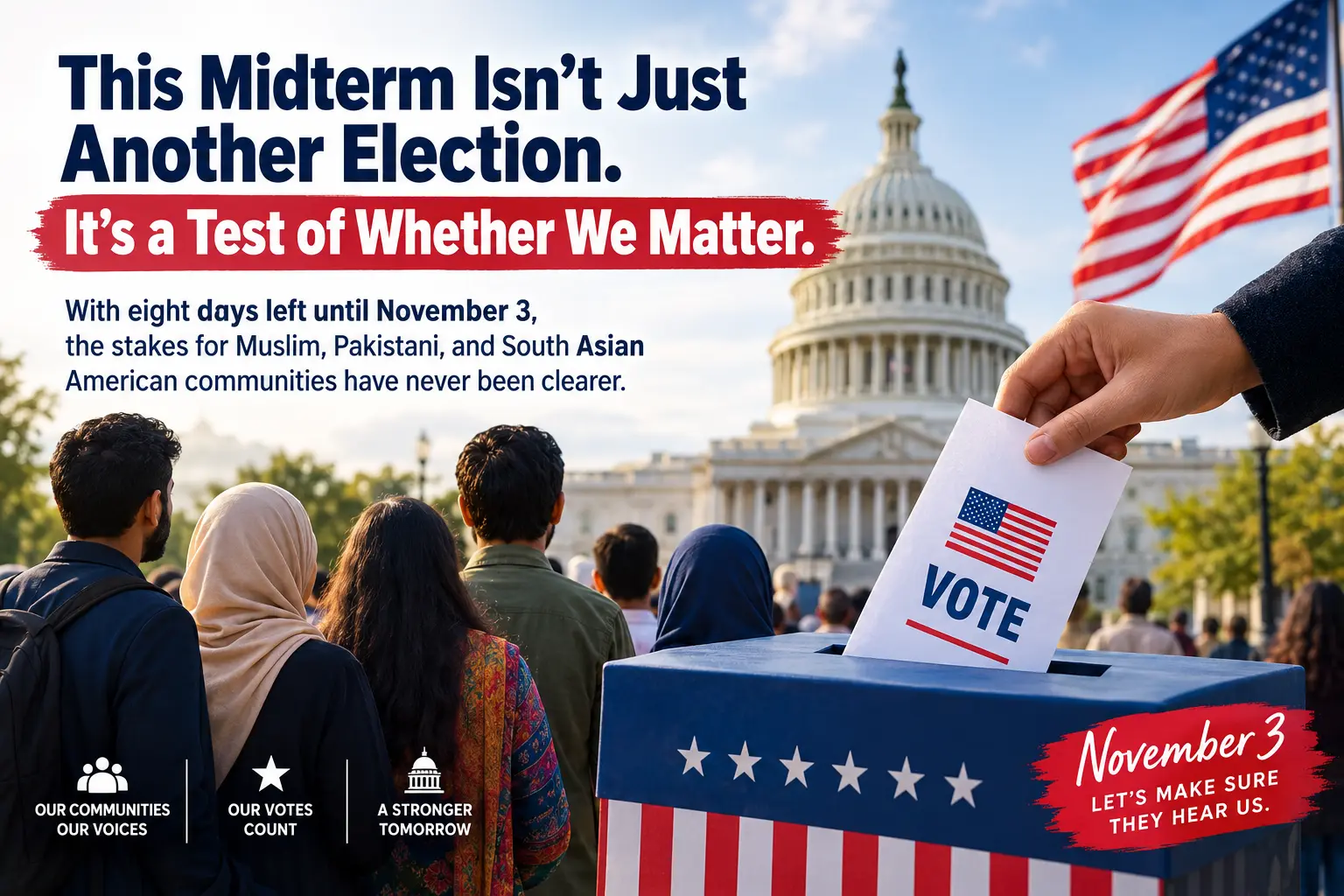
This Midterm Isn’t Just Another Election. It’s a Test of Whether We Matter.
With eight days left until November 3, the stakes for Muslim, Pakistani, and South Asian American communities have never been clearer.
America is heading into one of the most consequential midterms in recent memory. Control of both the House and Senate is genuinely up for grabs. Forecasts currently give Democrats a strong chance of flipping the House and a solid shot at the Senate. President Trump’s approval sits deep underwater, and the cost of living remains the issue voters feel every single day.
But for Muslim Americans, Pakistani Americans, South Asian Americans, and immigrant communities more broadly, this election carries a heavier weight.
We’re watching gas stay above $4 a gallon for months. Diesel prices hit records earlier this fall and are still painfully high. Inflation ticked up to 3.7% in the latest reading, largely driven by energy costs tied to the ongoing conflict involving Iran. Groceries have cooled a bit overall, but meat — especially ground beef — remains expensive, and families still feel the squeeze when they fill the cart or the tank. Job growth has slowed even as unemployment stays near 4.2%. These aren’t abstract numbers. They’re the difference between making rent, helping family back home, and having a little breathing room.
At the same time, something important is happening inside our communities.
A record number of Muslim Americans — at least 51 confirmed — are on the ballot this year, from city councils all the way to a competitive U.S. Senate race in Michigan. Community groups are running workshops, registering voters, and urging people not to sit this one out. Alliances between Pakistani, South Asian, Arab, and other Muslim American networks are forming in key states. The message is simple and powerful: we are citizens. We work. We pay taxes. We raise our kids here. And our votes count the same as anyone else’s.
Some people in our communities still feel tired or cynical. Others worry their vote won’t change anything. That’s understandable. But history shows that when communities like ours turn out in strong numbers, politicians notice. When we stay home, they don’t.
This midterm will shape the next two years of policy on immigration enforcement, foreign policy, economic priorities, and how seriously Washington treats the concerns of Muslim and immigrant Americans. It will also decide who holds power when bigger fights over rights, representation, and belonging come up again.
So the ask is straightforward.
If you haven’t voted early yet, make the plan now. Check your registration. Find your polling place or drop box. Take a friend or family member with you. Talk to the people who usually sit these out. Remind them that sitting out is still a choice — and it’s a choice that leaves our voice quieter than it needs to be.
We don’t have to agree on every candidate or every issue. We just have to show up. Because the people who decide the future of this country are the ones who actually cast a ballot.
November 3 is almost here. Let’s make sure they hear us.